

Lisbon and Porto are separated by roughly 300 kilometres, but the best way to travel between them depends on more than the headline journey time.
For most trips I would take the train. This guide compares the real trade-offs, including departure stations, arrival points, luggage, tolls and the time needed to reach each city centre.
What is the best way to travel from Lisbon to Porto?
For most visitors travelling from city centre to city centre, the train is the best balance of speed, comfort and simplicity.
The fastest direct rail services normally take just under three hours. Buses can cost less, driving gives you the freedom to stop, and flying only becomes competitive when it connects with another flight.
Compare the complete journey from accommodation to accommodation. A cheaper departure can lose its advantage when the terminal is inconvenient, while a train to Campanhã still needs a short final connection into central Porto. See what to do after arrival with this 3-day Porto itinerary.
- ✓ Best overall: direct train
- ✓ Best for a lower fare: intercity bus
- ✓ Best for stops along the way: car
- ✓ Best when connecting by air: flight
Lisbon to Porto by train
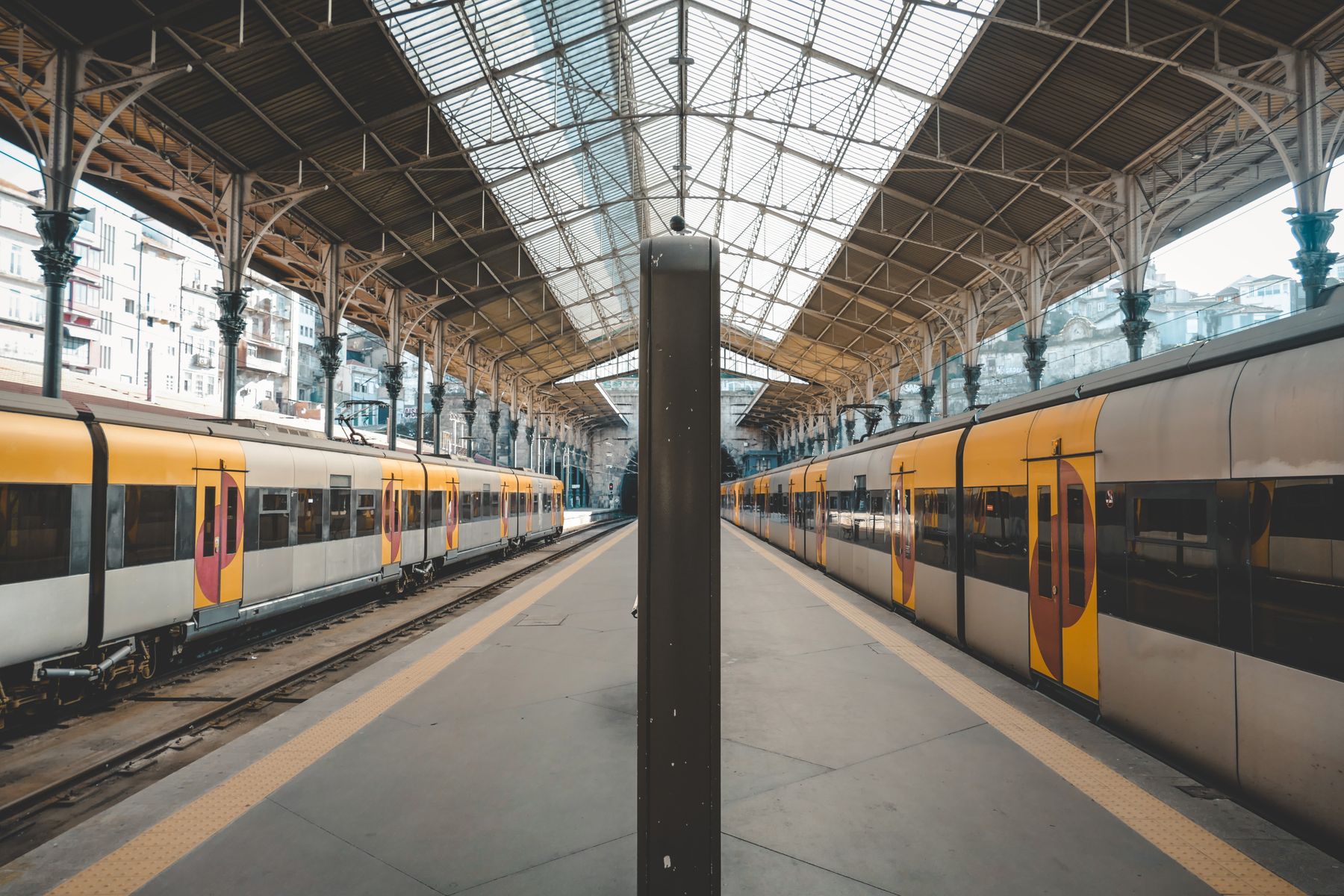
Comboios de Portugal operates direct Alfa Pendular and Intercidades services between Lisbon and Porto. Alfa Pendular is normally the fastest option, while Intercidades services take slightly longer.
In Lisbon, long-distance trains commonly leave from Santa Apolónia and Oriente. In Porto, they arrive at Campanhã, where an included or separately shown urban-train connection may continue to São Bento. Check the exact stations on your ticket rather than assuming the city-centre names.
How long is the train from Lisbon to Porto?
The fastest scheduled services generally take around 2 hours 50 minutes. Other direct services take a little over three hours, and the final connection from Campanhã adds time if you are staying near São Bento or Ribeira.
When should you book?
Advance fares can be cheaper than buying close to departure, particularly for fixed travel dates. Friday evenings, Sundays and holiday periods are the times when I would book earliest.
Use the official CP timetable for live departure times and current fares, because both can change.
Lisbon to Porto by bus
Direct coaches run throughout the day and can be the cheapest practical option. Journey times are commonly longer than the fastest train and are more exposed to road traffic.
The departure and arrival terminal matters. Lisbon services may use Oriente or Sete Rios, while Porto arrivals can use different terminals depending on the operator. Compare the complete hotel-to-hotel journey, not only the scheduled time.
- ✓ Check the exact Lisbon terminal
- ✓ Confirm the Porto arrival point
- ✓ Review luggage allowances
- ✓ Allow for traffic at city entrances
Driving from Lisbon to Porto
The direct motorway journey is approximately 300 kilometres and takes around three hours without long stops in normal traffic. The A1 is straightforward but includes tolls.
Driving becomes worthwhile when the journey is part of the trip. Coimbra is the easiest major stop on the direct route; Óbidos, Nazaré and Aveiro can work when you have more time and deliberately choose a slower itinerary.
A car is less useful once you reach central Porto. Parking, one-way streets and steep historic lanes make a hotel with confirmed parking important. See the detailed Lisbon-to-Porto driving route and stop options.
Flying from Lisbon to Porto
The flight itself is short, but the complete trip includes travel to Lisbon Airport, security, boarding, baggage and the transfer from Porto Airport to the city.
For a standalone city-centre journey, the train is usually simpler. Flying makes more sense when Porto is reached on the same itinerary as a connecting flight or when the fare and timing solve a specific constraint.
Tickets, seats and luggage
Train and coach fares are normally tied to a specific service, so check exchange and refund conditions before choosing the lowest price. Confirm whether a seat is assigned and keep the ticket accessible offline in case mobile data is slow at the station.
Standard luggage is usually straightforward on both modes, but oversized cases, bicycles and special equipment can follow separate rules. On trains, keep smaller valuables with you and avoid choosing a connection so tight that moving bags between platforms becomes stressful.
Train, bus, car or plane: which should you choose?
Choose the train when you want the easiest direct journey. Choose the bus when price matters most and the terminal locations work for you. Drive when you want meaningful stops or need a car after Porto.
I would not fly purely to save time between central Lisbon and central Porto. Once airport transfers and waiting are included, the apparent advantage normally disappears. See the complete Porto Airport guide for a flight connection.
Which option is best with children, luggage or limited mobility?
The train is usually the easiest public-transport option with standard luggage because seats, toilets and the ability to stand during the journey make the trip more comfortable. The difficult part is often the final transfer from Campanhã rather than the intercity service itself.
A direct coach can work well when both terminals are convenient, but confirm whether luggage must remain in the hold and how far the arrival point is from the accommodation. Driving provides door-to-door control only when the hotel has practical vehicle access and confirmed parking.
Travellers using mobility assistance should request the operator's support within its stated notice period and verify the facilities at the exact departure station. Do not assume every older platform, coach stop or historic-centre pavement offers the same access. See parking and driving conditions in central Porto.
Should you stop between Lisbon and Porto?
A stop makes sense only when you are driving or deliberately splitting the journey. Coimbra is closest to the direct A1 corridor and works best for a half-day or overnight break. Óbidos and Nazaré require a less direct route, while Aveiro is more logical near the Porto end.
Do not buy separate train tickets around a brief stop without checking schedules, luggage storage and whether the saving justifies losing a direct service. If Porto is the main destination and the trip lasts only a few days, travelling directly normally protects more useful sightseeing time. See the complete Lisbon-to-Porto road-trip route.
Arriving in Porto
Campanhã is east of the historic centre. Urban trains, metro, buses, taxis and ride-hailing connect it with central districts.
If you are staying in Ribeira, remember that the final section can be steep and awkward with luggage. A short taxi from Campanhã may be more comfortable than combining public transport with stairs and cobbled streets.
Confirm the hotel entrance rather than navigating only to the neighbourhood name. Some pedestrian streets and river-level properties require a final walk that is easy without bags and inconvenient with a large case. See Ribeira's streets, gradients and riverfront and where to stay in Porto for a first visit.
Useful answers
FAQ - Lisbon to Porto
The fastest direct services normally take around 2 hours 50 minutes. Other trains take a little over three hours, before any final connection in Porto.


