

For most visitors, the simplest way to pay for public transport in Porto is a Blue Andante card loaded with the correct zone ticket. Buy one card per person, validate it before boarding the metro or train, and validate again when you change line or vehicle. It works across the participating Andante network rather than at a short list of stations.
You can also tap a Visa or Mastercard at specially marked validators at selected metro stations and on STCP bus 500. That is a limited travel pilot. A different bank-card terminal beside the driver sells a €2.50 onboard ticket on every STCP bus; that ticket covers only that bus ride. Knowing which reader you are tapping avoids a surprisingly common fare mistake.
This guide uses the published 2026 fares and explains what to do on the metro, on buses and when changing services. Check your route's zones before buying: a cheap central journey and an airport journey may need different tickets.
Which Porto transport payment method should you choose?
The lowest price depends on the journey, not just the payment technology. A Z2 Blue Andante ride is €1.40, while the bank-card pilot charges the Z4 fare of €2.30 even if a shorter zone ticket would have covered your route. The reusable Blue card adds €0.60 on its first purchase. All amounts here are published 2026 fares checked on 21 October 2026; verify them again before travelling.
If you will use several metro and bus routes, start with Andante. The pilot is convenient when you board at an eligible station and want to travel without first buying a card. The driver terminal is a fallback for a single STCP bus, especially when your planned Andante route does not apply. See the official 2026 Andante fare table, the official bank-card pilot stations and the STCP onboard card-payment announcement.
| Method | Best use | 2026 cost | Transfers |
|---|---|---|---|
| Blue Andante | Metro, participating buses and eligible CP journeys | €0.60 reusable card; Z2 €1.40, Z4 €2.30 | Yes, within paid zones and ticket time |
| Bank card at a marked travel validator | Listed metro boarding stations and STCP line 500 | €2.30 for 75 minutes; €7.75 daily cap | Only within the pilot network |
| Bank card at the driver terminal | One ride on any STCP bus | €2.50 onboard ticket | No transfer; keep the receipt |
| Anda travel app | Participating Andante services on a compatible Android phone | Andante fares calculated by the app | Yes, with a new validation at changes |
How do you pay for Porto Metro?
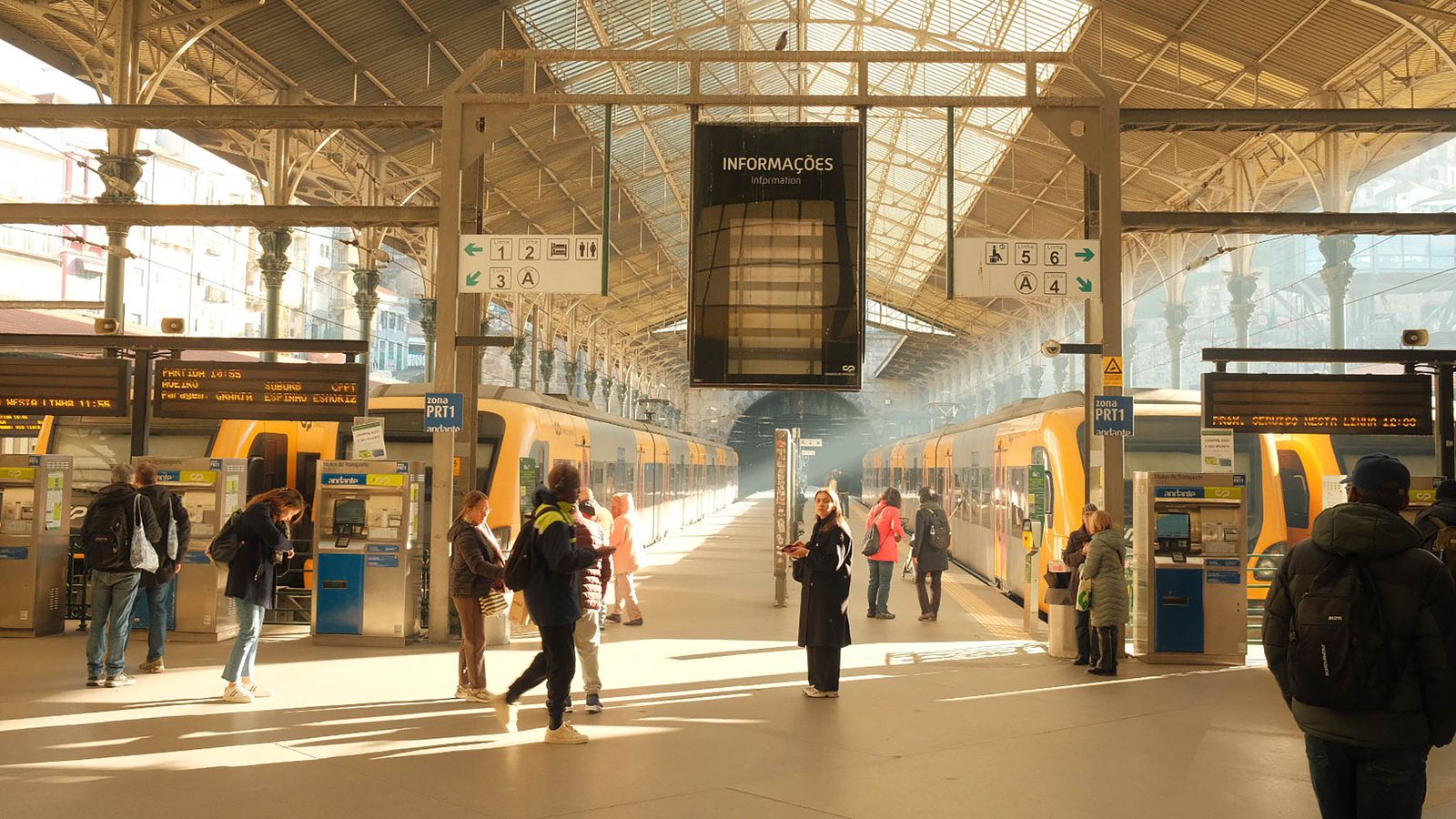
At a metro station, look for the Andante ticket machine before you go to the platform. Buy a Blue card if you do not have one, choose the ticket zone shown by the official journey planner or station information, and load the ticket. Touch the card to an Andante validator before your first train. A green light and sound confirm validation; a red signal means you have not completed it and need to resolve the problem before travelling.
Porto Metro usually uses open platforms rather than ticket barriers. Walking onto a train without validation is still travelling without a valid fare. You validate again when changing metro line, and the same valid ticket continues within its purchased zones and time; you do not buy a fresh ride merely because you change trains.
At certain stations, a separate marked bank-card validator lets you tap an eligible Visa or Mastercard instead. Do not assume every Andante validator also accepts a bank card. Check the station list below before relying on this option, particularly if your return trip begins somewhere different. See the Porto Metro map and zone guide and Andante's validation instructions.
When is a Blue Andante card the best choice?
Blue Andante is the flexible default for visitors who want to mix metro, STCP or UNIR buses and eligible CP journeys within the Andante network. The card costs €0.60, is rechargeable and is for one traveller at a time. Select a zone ticket for the complete route: Z2 is €1.40 and Z4 is €2.30 in the 2026 tariff. The zone is a travel-area rule, not simply a count of stops.
The clock starts at the first validation. For example, a Z2 or Z3 single ticket allows one hour; a Z4 allows one hour and 15 minutes. Transfers within that period and zone coverage are included when you validate again on the new line or vehicle. If your journey runs beyond either limit, load the appropriate ticket rather than assuming the previous one remains valid.
For an airport arrival, confirm the zone for your exact destination before loading. A Z4 is a common airport-to-centre example, but a different final stop can change the calculation. If you already own a Blue card, recharge it instead of buying another; detailed loading steps belong in a separate top-up guide. See Andante tickets, zones and passes, how to top up a Blue Andante card, the airport-to-Porto transport options and the official Blue Andante card rules.
Where does contactless bank-card payment work on Porto Metro?
The Visa and Mastercard tap-to-travel pilot accepts boarding at specific metro stations, using validators clearly marked for bank cards. On Line E, Andante lists Aeroporto, Senhora da Hora, Casa da Música and Trindade. On lines A, B, C, D and F, it lists Campanhã, Bolhão, Campo 24 de Agosto, São Bento and Aliados. The scheme also covers STCP line 500. A station outside this list is not a safe place to rely on your bank card for travel.
Tap the marked reader with one physical card, phone or watch for each passenger. Wait for the green confirmation and keep that same card or device available for inspection. The pilot fare is €2.30 for a journey of up to 75 minutes within its participating network. After four or more eligible journeys in the same day, the published cap is €7.75. A physical card and its phone-wallet version can be counted separately, so stick with the same one all day.
This pilot does not turn every Porto Metro stop, bus or CP train into an open-loop bank-card journey. It is especially useful at Aeroporto or Trindade when your entire plan stays inside the listed boarding network. If you expect to board elsewhere, buy Andante instead. Check the official list again on your travel day because pilot coverage can change. See current bank-card validator locations and the airport metro route.
How do you pay on an STCP bus?
With a valid Andante ticket, board and validate it on the bus reader. If you are changing from metro to bus, validation is required again even when you are still inside the ticket's time and zones. That is the way to keep a covered transfer rather than pay for an unrelated single ride.
If you need an onboard ticket, every STCP bus has a bank-card terminal beside the driver. Tap a physical card, phone or watch to buy a €2.50 ticket, take the printed receipt and keep it for inspection. It covers one journey on that bus, not a transfer. You can pay for several passengers with one bank card by telling the driver how many tickets you need.
On STCP line 500, a marked bank-card travel validator may offer the separate €2.30 pilot fare and its limited transfer rules. The driver terminal's €2.50 ticket is a different product. Look at which reader you are using rather than expecting a card tap anywhere on the bus to create the same ticket. Other bus operators may have different onboard arrangements; check the operator before boarding. See STCP's current onboard bank-card guidance.
Can you pay with a phone or the Anda app?
A phone or watch with an eligible Visa or Mastercard in its wallet can be used at the pilot's marked travel validators, just like the corresponding physical card. It still follows the pilot's limited station and route list. On an STCP bus, that same wallet can also buy the separate onboard ticket at the driver terminal. The location of the tap determines which product you buy.
The official Anda travel app is another method entirely. It uses a compatible Android phone with NFC and Bluetooth, registration and payment setup. Turn on the required phone settings, validate with the app before boarding and validate again after changing line or mode. Anda calculates eligible Andante fares automatically. Check setup in advance rather than trying to register as your train arrives.
An iPhone with Apple Pay may be usable for the limited bank-card pilot or STCP onboard purchase, but that is not the same as having the Android Anda travel app. If you want broad Andante coverage with minimal setup, a Blue card is the clearer option. See official Anda app requirements and Andante's Anda app questions.
Which method is cheaper for common journeys?
For a short central trip that the planner prices as Z2, a Blue Andante ticket costs €1.40. Your first such ride costs €2.00 including the reusable €0.60 card; later Z2 rides on that card cost the ticket price. The bank-card pilot charges €2.30 even if the same route would have needed only Z2, and it works only at participating boarding points.
From Aeroporto to a central pilot station such as Trindade, the published Z4 single-ticket fare and pilot bank-card fare are both €2.30. If you have no Blue card, Andante adds the €0.60 card purchase. That can make a bank-card tap attractive for an eligible one-off arrival, but only if you can make any later boardings within the pilot network or switch to Andante.
If you only need one STCP bus and have no valid Andante card, the €2.50 onboard ticket avoids searching for a sales point. If you plan several rides or a bus-to-metro change, calculate an Andante ticket or pass instead. The pilot's €7.75 daily cap applies only to qualifying pilot taps on the same card or device; it is not a general fare cap for all Porto transport. See the airport-to-centre journey and longer-use Andante tickets.
When do you validate, transfer or tap out?
With Blue Andante, validate before the first metro or eligible train, and on entering each bus. Validate again when changing line or mode, including a metro-to-metro change. A successful green signal is your confirmation. You do not need a separate exit tap for a normal Andante journey; the important events are boarding and changes.
For the bank-card pilot, use its marked reader when starting and on eligible changes as instructed at the validator. Keep the same physical card or digital device through the day for the correct fare calculation and any inspection. If a reader flashes red, try again correctly or obtain another valid ticket before boarding; a failed tap is not a ticket.
For an STCP onboard ticket bought beside the driver, retain the printed receipt until the end of that bus ride. It cannot be reused on the next bus or metro. A purchased ticket is only useful when the right product has been validated or issued for the journey you are actually taking. See Andante's official validation rules.
What payment mistakes should you avoid?
Do not present a wallet containing several contactless cards: take out the exact card you intend to use. A phone or watch may be represented by a different payment token from its physical card, even if both draw from one bank account. Switching between them can split the bank-card pilot's daily calculations.
Do not share one Blue Andante card between two people travelling together, or one pilot bank card or device for two passengers. Each person needs their own validated travel medium. The exception is buying separate €2.50 onboard STCP receipts for multiple people at the driver terminal.
Finally, check the return journey as well as the outward one. A bank-card pilot tap at Aeroporto does not guarantee a pilot reader at your later boarding stop. If the route planner shows Z2, avoid buying a Z4-priced pilot journey solely because it feels more convenient. Keep the official fare, coverage and validation pages handy in case operating rules change.
Useful answers
FAQ - Porto transport how to pay
Yes, with an eligible Visa or Mastercard at specially marked bank-card validators when boarding at a participating metro station. This pilot does not cover every metro station. Otherwise, buy and validate an Andante ticket.


